Decoding Professional Marine Electronics for Serious Boaters
Good marine electronics are not just fancy gadgets; they are what help you bring everyone home safe when the weather turns or the traffic piles up on the water. Once you start running harder and farther in late July, "good enough" screens and budget gear can slip from annoying to risky very fast.
This article breaks down what professional marine electronics really are, how the main systems work together, and how to build a setup that fits the way you actually use your boat, with clear, real-world advice you can use right away.
What Makes Electronics "Professional" on the Water
When we talk about professional marine electronics, we mean gear built for serious time on the water. This type of equipment is made to handle sun, spray, bumps, and long days without quitting when you need it most.
Key traits of pro-grade gear include:
- Strong build quality and weather sealing
- Reliable performance in heat, glare, and chop
- Deep features that go beyond basic depth and direction
- The ability to connect with other units on the boat
Modern pro systems often link together:
- Chartplotters and multifunction displays
- Sonar and fish-finding tools
- Radar and cameras
- VHF, AIS, and emergency beacons
- Engine, fuel, and sensor data
Instead of a few random units bolted around the helm, a professional setup acts like one teamwork system. Your GPS, radar, sonar, and radios speak to each other, so you see a clear story of what is around you, what is under you, and where you are going.
Core Systems Every Serious Boater Should Know
The heart of most pro setups is the chartplotter or multifunction display. When seas are choppy or the sky is gray, you want:
- A bright, sunlight-readable screen
- Fast redraws when you zoom and pan
- Simple menus that you can use with one hand
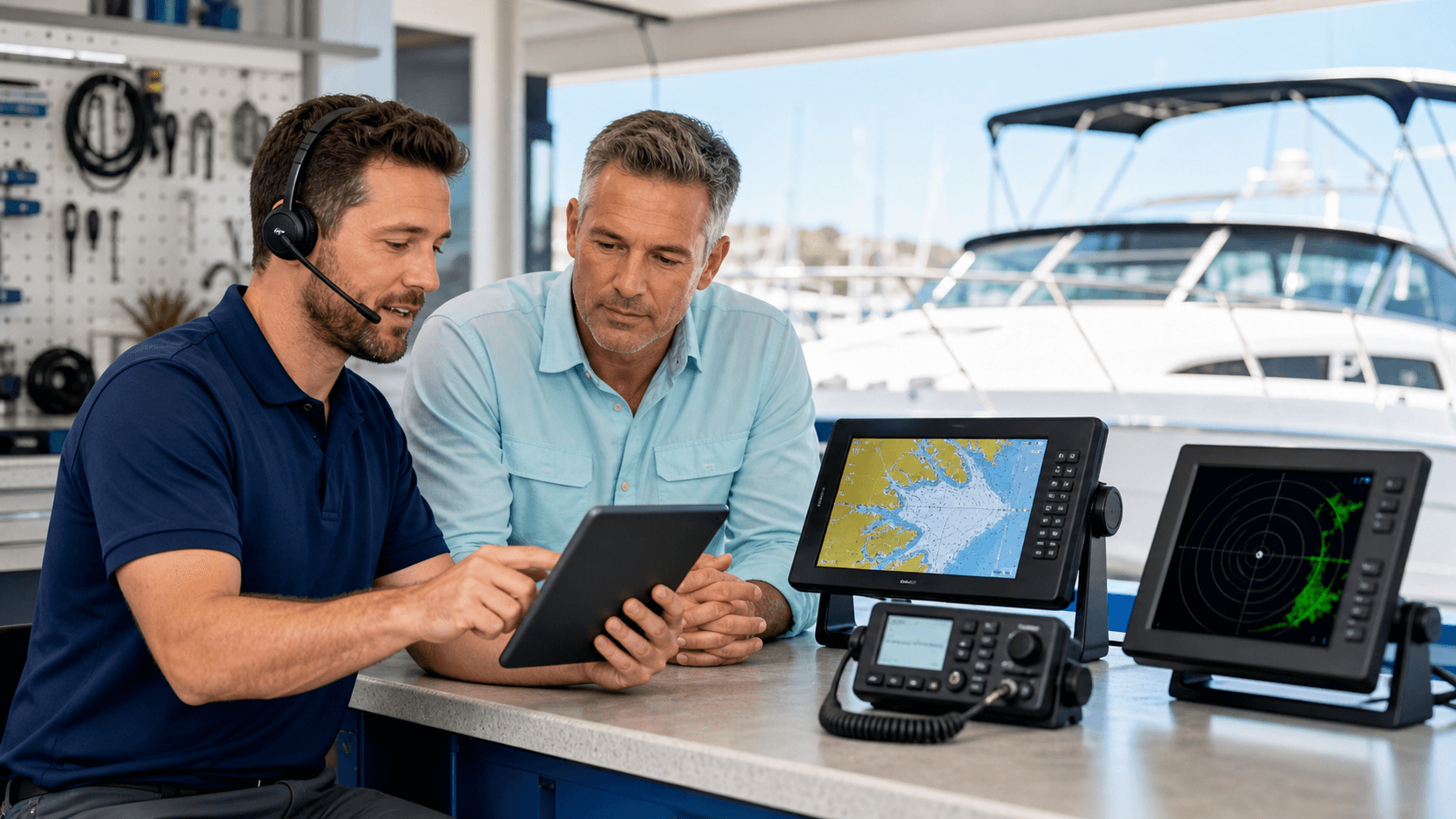
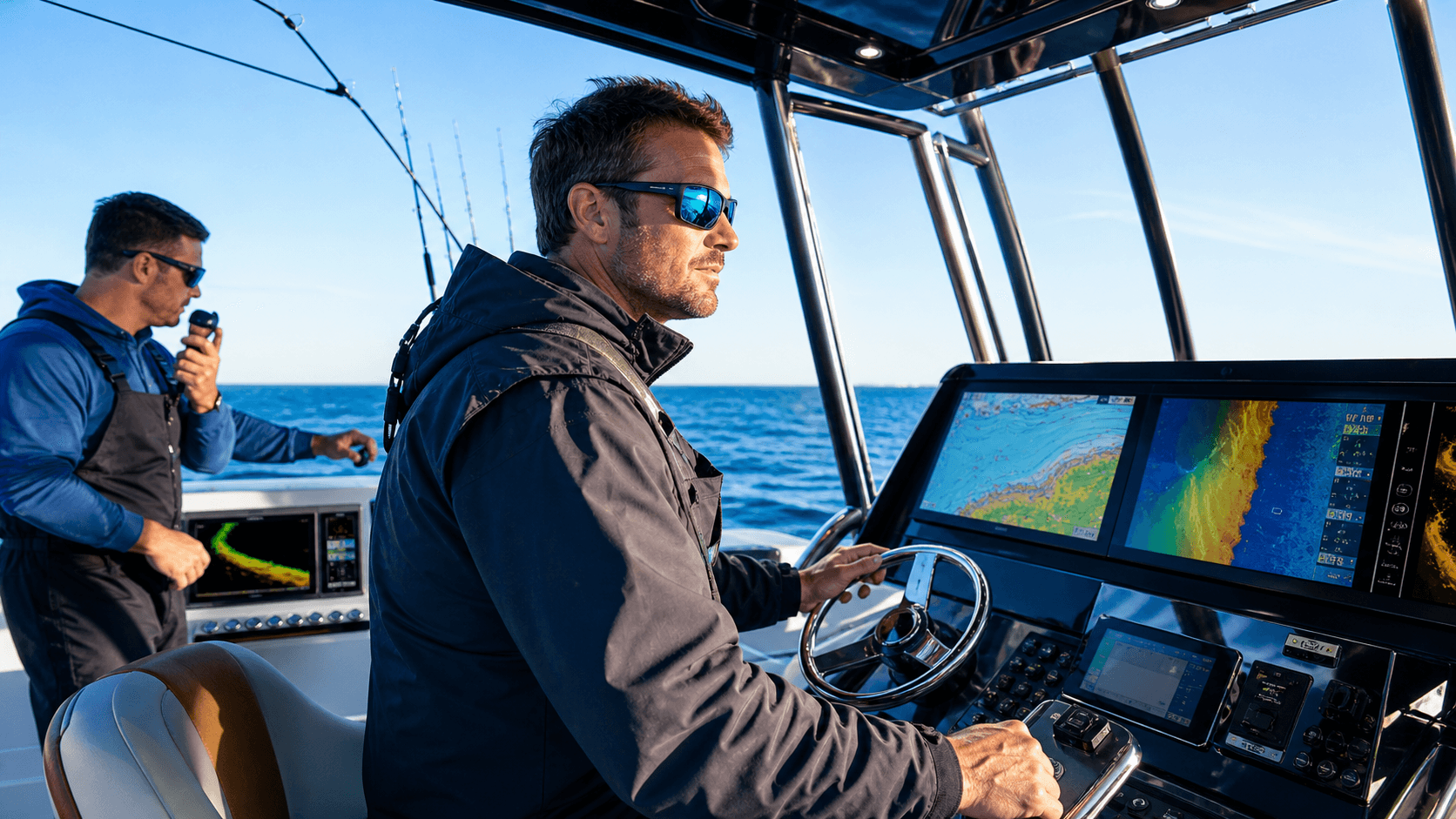
Multifunction displays (MFDs) let you put radar, sonar, charts, and engine data on one or more screens. You can split the view so the helm shows only what matters for that moment, whether you are threading a channel, chasing a break line, or backing into a tight slip.
For anglers, sonar is where the fun really starts. CHIRP sonar, side-scan, and down-scan imaging help turn random wandering into focused hunting. A few basics to think about:
- Transducer type and power
- Mounting style, through-hull or transom
- Clean water flow over the face for best picture
Good sonar shows you bottom shape, bait, and game fish with much more detail than old-school flashers. You read structure, not just depth.
Radar is your extra set of eyes when you run at night, in fog, or through busy channels during peak summer. Solid-state radar with target tracking and chart overlay lets you see boats, buoys, and squalls right on top of your chartplotter map. That makes it easier to steer clear of traffic and unmarked trouble.
Autopilot is another piece that serious boaters quickly learn to value. When tied into GPS, heading sensors, and, sometimes, wind or speed data, an integrated autopilot can:
- Hold a straight course on long runs
- Follow a route of waypoints
- Help with slow, precise trolling paths
That means less wheel time, less fatigue, and more focus on what matters, like weather, traffic, and crew.
Safety and Communication Gear That Has Your Back
Professional marine electronics are not only about finding fish or pretty graphics. They are a safety net when things go wrong.
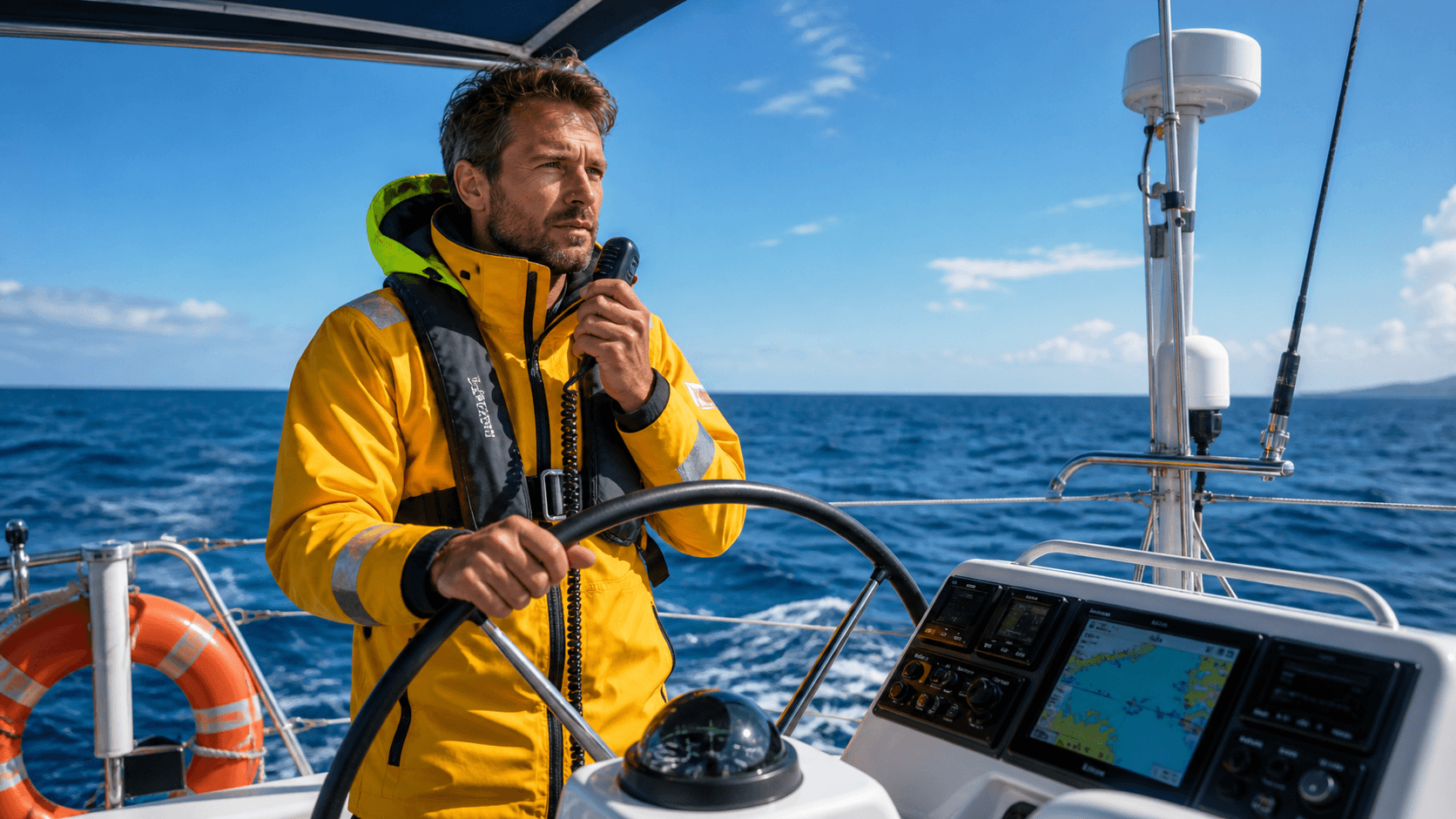
A fixed-mount VHF radio with Digital Selective Calling (DSC) is a must, even if everyone has a smartphone in their pocket. With a properly registered MMSI, a single button press can send your distress call, position, and boat ID to nearby vessels and the Coast Guard. AIS-enabled radios go one step further, sharing and receiving data on other AIS-equipped vessels around you.
AIS (Automatic Identification System) is a huge help in busy summer traffic. On your display, you can see:
- Vessel names and types
- Speed and heading
- Closest point of approach (CPA)
- Time to closest point of approach (TCPA)
That means you can act early when a fast-moving ship or ferry is on track to pass a little too close.
For bigger water and offshore runs, pro-grade EPIRBs and PLBs are your last line of defense. These beacons talk to satellites and feed search and rescue teams the information they need to find you, even when radios and phones fail.
Redundancy matters too. Serious boaters back up digital tools with:
- Secondary GPS sources
- A spare power plan
- Paper charts and a simple compass
If one piece fails, another can carry you home.
Building a Pro-Level Package That Fits Your Style
Before you start swapping hardware, it helps to think honestly about how you use your boat.
- Offshore fishing: Put more weight on sonar detail, radar range, and autopilot that can follow tight trolling lines.
- Coastal cruising: Focus on reliable chartplotters, radar, AIS, and a steady autopilot for long days between ports.
- Lakes and rivers: You may want sharper mapping, shallow water alerts, and fast, clear sonar more than long-range radar.
- Watersports and family fun: Depth awareness, cameras, and simple, clear displays keep things safe when people are in the water.
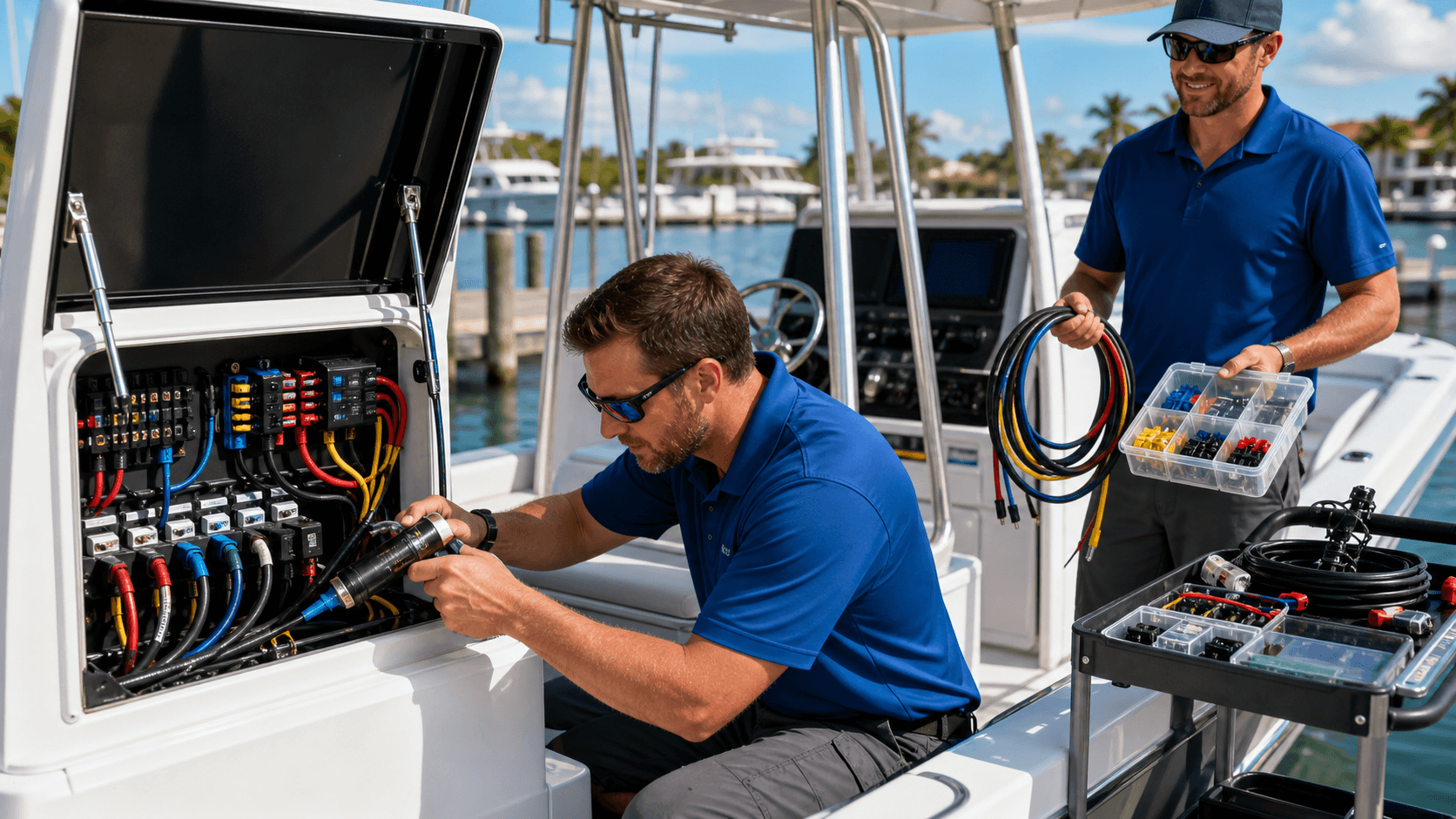
Once you know your style, think about networking. Modern boats lean on systems like NMEA 2000, Ethernet, and brand-specific networks so that engines, fuel sensors, wind data, and cameras all share information. Planning for that kind of network from the start is usually smoother than adding random pieces later.
A smart upgrade path often looks like this:
- Start with a solid chartplotter and GPS
- Add radar for low-visibility days
- Then step up sonar and transducers
- Finish with extras like AIS, cameras, and comfort displays
Choosing brands and components comes down to reliability, support, and how well they play together. High-performance electronics that are known for solid integration make it easier to build a clean, pro-grade helm instead of a messy mix of gear.
Seasonal Fine-Tuning for Peak Summer Runs
By late July, sun, heat, and heavy traffic test every weak spot in your system. A little tuning can make a big difference.
On bright days, set your screens for:
- Maximum brightness and good contrast
- Daytime color themes that are easy to see in sun
- Night modes for the run home after sunset
Higher-quality displays hold up better to glare and heat, keeping your view clear when the cockpit feels like an oven.
Peak season also means crowded waterways and quick pop-up storms. This is the time to lean on your tech:
- Use radar and AIS to watch traffic behind headlands and around bends
- Follow detailed charts in tight channels and sandbar areas
- Watch weather data if your system supports it, and give storms a wide gap
Mid-season is a good time for fast checks:
- Clean and inspect transducers for growth or damage
- Make sure antenna mounts are tight and cables secure
- Update charts and software on your main units
- Confirm EPIRBs, PLBs, AIS, and VHF are working and correctly registered
When it is time for bigger summer trips or tournaments, use your electronics for planning. Build routes with safe depth margins, mark fuel stops, and think about wind and waves along the path, not just at the destination. A professional setup turns that planning from guesswork into a clear, simple routine.
Serious boaters do not rely on luck. With the right professional marine electronics, your helm becomes a strong partner, helping you see more, work less, and enjoy every run with a lot more confidence.
Upgrade Your Vessel With Reliable Marine Technology Today
Explore our curated selection of professional marine electronics to equip your boat with the performance, safety, and reliability you need on the water. At MarineXGear, we carefully choose products that stand up to real conditions so you can focus on the journey ahead. If you have questions or need help selecting the right setup for your vessel, simply contact us and our team will guide you.