Secure Summer Cruising Starts with the Right Anchor
A calm cove can turn lively in minutes when the afternoon breeze fills in and more boats crowd the anchorage. At that point, the one thing that really matters is whether your anchor is set and your gear is sized for the conditions. A solid anchor system lets you relax in the cockpit instead of staring at shoreline rocks and wondering if you are drifting.
In this guide, we walk through how to choose marine anchor systems that match your boat and your summer plans. We will look at boat size and type, where you cruise, bottom conditions, typical weather, and how often you anchor out. When these pieces line up, you sleep better, protect your boat and crew, and enjoy every stop along the way.
Match Your Anchor System to Your Summer Cruising Style
Your summer plans should shape your anchor setup. A quick lunch stop at a sandbar is very different from a week of coastal cruising or a stormy night in a tight harbor.
Think about how you use your boat most often:
- Day trips to sandbars and beaches
- Long weekends hopping from cove to cove
- Weeklong coastal or island cruises
- Family time on inland lakes and rivers
Next, look at your boat itself. Key factors include:
- Length and overall weight or displacement
- Hull design and draft
- Windage, like tall cabins, T-tops, or flybridges
- Whether you usually anchor alone or raft up with other boats
Environment matters just as much. Summer often brings steady afternoon sea breezes, pop-up thunderstorms, and busy anchorages. Tides and currents can swing the boat around. Bottoms can shift from sand to mud to grass in just a short run. If you only plan for a calm afternoon in perfect sand, you may be in trouble on that one stormy night.
A single, tiny anchor is rarely enough. Many cruisers are better served by a primary anchor system sized for the worst summer conditions they expect, plus a secondary anchor tuned to their usual spots. That second anchor can help in tight areas, bow and stern setups, or when the bottom does not match the forecast.
Core Components of Reliable Marine Anchor Systems
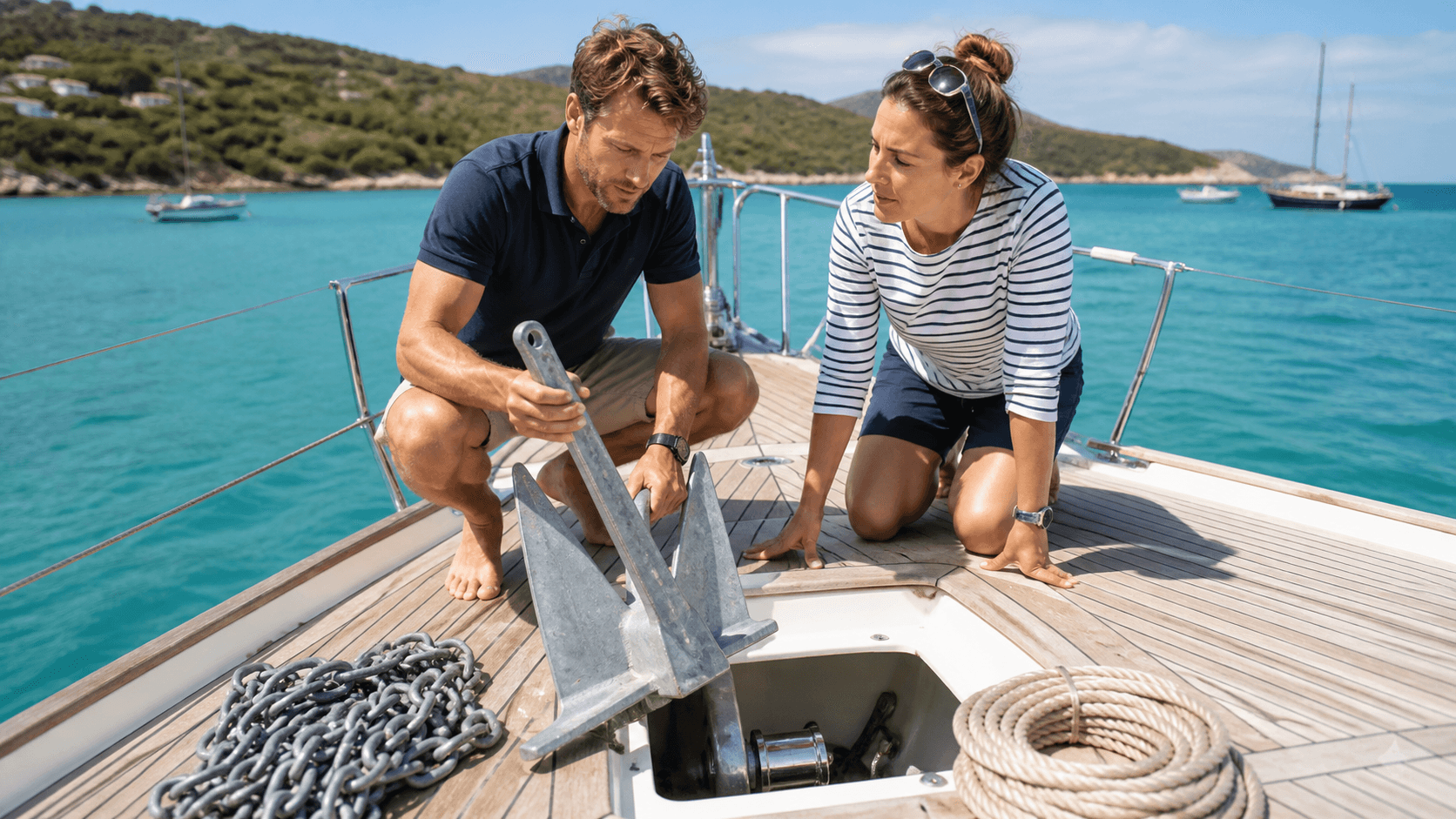
Anchoring is about more than just the anchor. A reliable system is a chain of parts, and the whole chain is only as strong as its weakest link.
The main pieces are:
- Anchor type and size
- Chain and rope rode
- Shackles, swivels, and connectors
- Bow roller and windlass, if installed
- Cleats and fairleads
- Chafe gear where lines touch rub rails or hawse pipes
Anchor design plays a big role in holding power. Common styles include:
- Fluke anchors, good in sand and some mud
- Plow anchors that roll and reset fairly well
- Scoop and newer "new-generation" anchors that dig fast and reset quickly when the wind shifts
Summer nights often bring wind shifts. Newer scoop-style anchors tend to reset faster when the boat swings, which helps keep you put when the breeze clocks around at 3 a.m.
For sizing, many makers offer charts that match anchor size to boat length and weight. A useful rule is to go a bit bigger than the bare minimum. That extra margin can help when a squall comes through or when crowded boats are swinging close in a tight harbor.
Your chain and rode matter just as much as the anchor:
- Coastal and offshore cruisers often favor more chain for better holding and shock control
- Lake and river boaters may use shorter chain and more rope, but still need quality components
- Splices should be smooth and strong so they run clean on a windlass and through chocks
Common mistakes include undersized shackles, cheap chain that rusts quickly, or mixing different metal types that can corrode where they meet. Every connection should match or exceed the working load of the main rode and anchor.
Choosing the Right Anchor for Your Summer Destinations
Where you drop the hook most often should guide your anchor choice. Different bottoms ask for different tools.
Here is a simple way to think about it:
- Sand: Many fluke, plow, and scoop anchors hold very well
- Mud: Scoop and some plow designs usually dig deep and stay put
- Grass or weed: Some anchors struggle to cut through and can clog; new-generation scoops often perform better
- Rock or rubble: No anchor is perfect here, but some shapes grab edges better than others
Soft mud can fool boaters. An anchor might feel set at first, then start to drag as wind builds. A design that digs deep and has a wide surface helps in those spots. In hard sand, many styles work, but the ones that reset quickly when the boat swings are big winners for busy summer nights.
It pays to carry at least two different anchor types. A strong primary that matches your most common bottom and a different style as backup, give you options when the new harbor does not look like the last one. Many marine anchor systems pair a high-holding primary anchor with a chain-heavy main rode for security, plus a lighter secondary setup for quick lunch stops, stern anchoring, or stopping close to shore.
Practical Setup Tips for Stress-Free Summer Anchoring
Good gear is only half the story. A clear, simple routine helps every set go smoother, even when the wind is up or the cove is crowded.
Basic steps that help in most summer situations:
- Check the chart for depth, bottom type, and swing room
- Plan where you want the boat to sit, not just where you first drop the hook
- Lower the anchor slowly while backing, do not just dump it in a pile
- Lay out enough rode, then gently back down to set it
- Take shore ranges or use GPS to be sure you are not dragging
Scope, the ratio of rode to water depth, is key. In calm weather with all chain, many boaters use shorter scope. When gusts or storms are possible, more is better. Adding even a little extra length can make a big difference in holding. On tidewater, keep an eye on changing depth and add or take in rode as needed.
A few simple habits make life easier:
- Mark rode lengths so you know how much you have out at a glance
- Store anchors so they are ready to deploy without tangles
- Keep a spare anchor ready for quick use
- Make sure everyone on board knows their job during anchoring and understands basic hand signals or voice commands
Accessories can round out the system: chain markers, retrieval buoys, snubbers to reduce shock loads, bridles for multihulls, and anchor alarms built into modern marine electronics all help you anchor more comfortably.
Upgrade Your Anchor Gear Before the Summer Rush
Before the season gets busy, it helps to really look at your current gear. Check for worn or rusted chain links, corroded shackles, stiff or chafed rope, and parts that feel small for your boat size or newer cruising plans. Small flaws often show up first during a crowded holiday weekend or a sudden squall, which is not the time you want surprises.
A simple checklist can help: primary anchor, secondary anchor, total chain length, rode condition, connectors, bow roller, and helpful add-ons like chafe gear or markers. From there, you can fill any gaps through a trusted marine reseller like MarineXGear so your marine anchor systems match the way you actually use your boat. When the gear is right and the setup is thoughtful, every stop feels less like a worry and more like the best part of your summer adventure.
Equip Your Boat With Reliable Holding Power Today
Explore our curated selection of marine anchor systems designed to keep your vessel secure in changing conditions. At MarineXGear, we focus on dependable gear so you can focus on enjoying your time on the water. If you have questions about sizing, bottom conditions, or installation, contact us and we will help you choose the right setup.