When Hidden Wiring Choices Shape Life or Death Moments
Out on open water in choppy fall seas, things can go bad fast. Thick fog can roll in, the wind can jump, and daylight can vanish quicker than you expect. When that happens, you lean hard on your GPS, radar, radio, and autopilot to keep you out of trouble and pointed toward home.
Most boaters trust those screens without thinking much about what is behind them. But what really decides whether your gear works in that tough moment is not just the brand on the box. It is the quality of the marine electronics installation hiding behind your dash and under your decks. That unseen work often decides if a scary moment stays a close call or turns into something far worse.
At MarineXGear, we focus on high-performance gear, but we also care about how that gear is installed and powered. We want boaters, anglers, and sailors to understand what safe, reliable installation looks like, especially as fall weather gets colder, rougher, and less forgiving.
Why Installation Quality Matters More Than Brand Names
Big brand logos are easy to see. Wiring, fuses, and connectors are not. Yet those hidden pieces can matter more than the label on your chartplotter.
Bad installation can show up in a lot of ugly ways, like:
- Intermittent power loss when the boat slams in a wave
- Random reboots when you hit the horn or trim tabs
- Fuzzy radar or glitchy sonar when other devices turn on
- Dead screens right when you need them most
Even top-tier gear can fail if:
- Wire size is too small or runs are too long
- Fuses are wrong or missing completely
- Antennas are mounted low, loose, or in a shaded spot
- Connectors are cheap, corroded, or poorly crimped
All your systems depend on one chain of trust: battery to switch to wiring to fuse to device to display. Any weak link in that chain can lead to more than simple frustration. It can mean:
- Bad GPS position, which can push you toward rocks or shoals
- A radio that sounds fine at the dock but cannot reach help offshore
- Batteries drained overnight, leaving you with no start power
- Shorts or overheated wires that increase fire risk
Anglers, weekend cruisers, and offshore boaters all count on that same chain. Quality gear helps, but quality installation is what holds it together when the water gets rough.
Critical Systems Where Mistakes Cost You the Most
Not every gadget on your boat carries the same level of risk if it fails. Some systems are directly tied to your safety margin.
VHF radios and AIS are your voice and your presence on the water. Small choices here can make a big difference:
- Antenna height affects how far you can be heard and how far you can receive
- Kinked or cheap coax cable can kill signal strength
- Loose or corroded connectors can make you nearly invisible to other boats
Autopilots, GPS units, and chartplotters live and die by clean power and solid data paths. Problems here can cause:
- Autopilot steering you off course because of a bad sensor feed
- Chartplotters losing position when a loose connection shakes free
- Networked devices dropping off because power is shared poorly
Radar, depth sounders, and fish finders depend heavily on physical placement:
- A radar mounted at the wrong angle can miss small targets in heavy seas
- A poorly placed transducer can lose bottom at speed or in chop
- Power wires run next to high draw gear can add noise and blur returns
On busy fall weekends or shoulder-season runs, you often deal with:
- Less daylight
- Colder water
- Fewer boats nearby to help
- More fast-moving storms
Those are the days when your electronics are not just convenient; they are your backup when senses and sight are limited.
Smart Marine Electronics Installation for Fall and Beyond
Fall brings cold spray, wet decks, and longer nights. The margin for error shrinks. This is when all the small choices behind your helm start to matter a lot more.
A smart marine electronics installation treats the boat as one whole system, not a pile of gadgets stuck wherever there is open space. Good installs usually include:
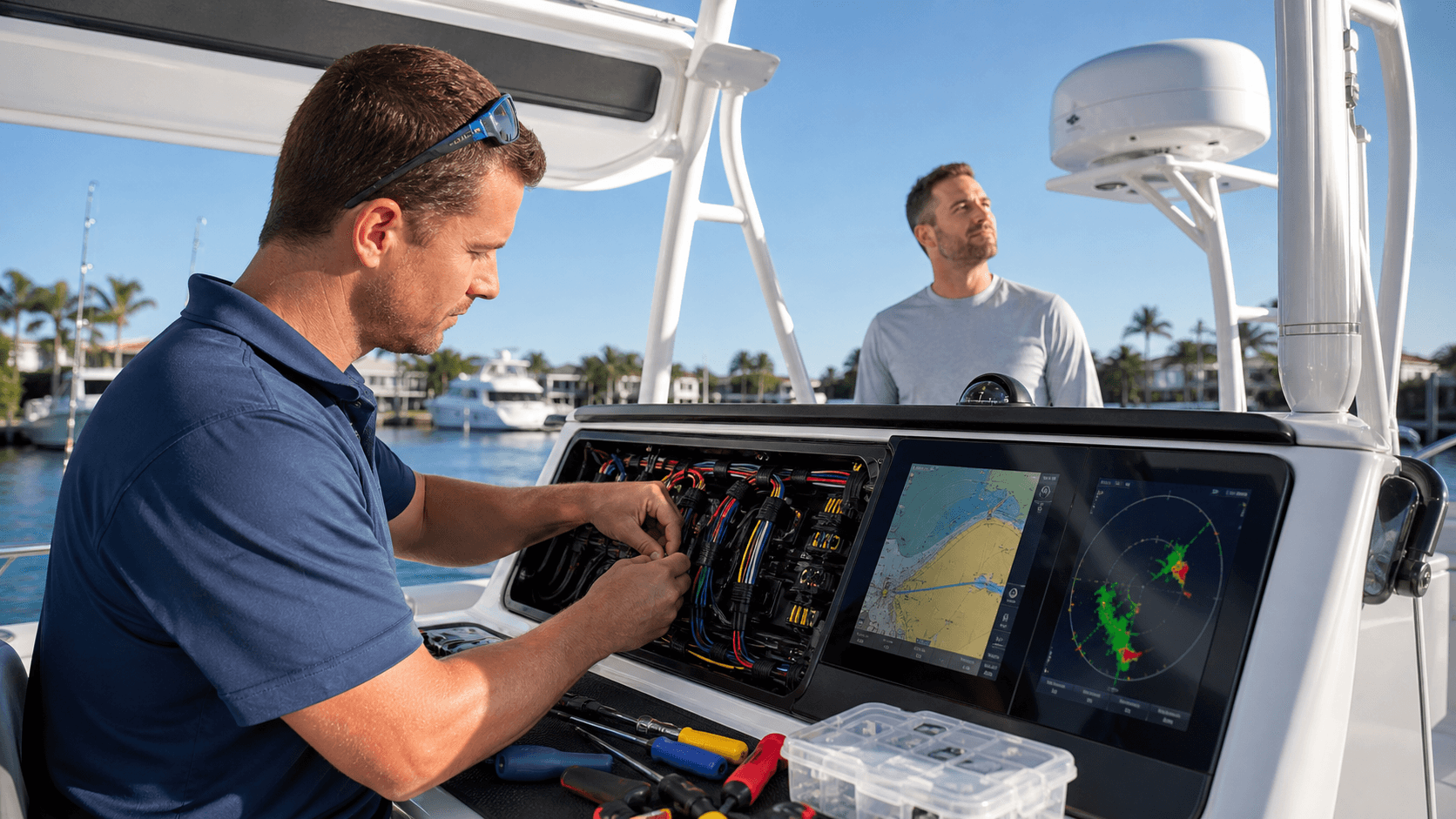
- Labeled wiring runs that are easy to trace
- Marine-grade connectors and tinned wire, not household parts
- Drip loops so water does not track straight into devices
- Correct fuses or breakers sized for each circuit
- A simple, documented layout that any pro can follow later
Thinking about your gear this way reduces surprise failures, especially as you move from fall into winter conditions, when wet and cold try hard to find every weakness.
Before you push out for late-season runs, it is smart to give your current setup a careful look. Have a qualified marine technician check for:
- Green or white corrosion on terminals and bus bars
- Loose crimp connections or wire nuts that do not belong on a boat
- Chafed cables where they pass through bulkheads or near moving parts
- Old software or firmware on chartplotters, radios, or autopilots
Catching these issues at the dock is a lot better than discovering them in a rising wind with a shoreline getting closer.
Choosing the Right Gear and Pro Help From the Start
Solid installation is easier when you start with quality, compatible equipment. Matching brands and systems can simplify networks, reduce adapter boxes, and keep connections cleaner. That makes it easier for pros to wire, fuse, and mount things in ways that hold up over years of use.
A thoughtful marine electronics installation plan looks at:
- Boat size and layout
- Typical weather and sea state for your area
- How far you run from safe harbor
- How long you are out at a time
- What backups you want if a main unit fails
Talking with experienced installers or knowledgeable retailers can help you sort out questions like:
- Where should the main display go so you can see it in rough seas?
- How many separate power feeds should the system have?
- What can share a circuit, and what deserves its own breaker?
- Where should sensors and antennas live for best performance?
Fall often makes a good window to upgrade or clean up wiring. The rush of peak season is easing, and you still have enough decent days to sea trial new gear before winter haul-out or heavy storms roll in.
Turn Your Electronics Into a Real Safety Net
Your electronics can be more than fancy screens. With the right gear and a clean, thoughtful install, they become a true safety net when the water, weather, and light turn against you.
Before your next fall outing, take time with a marine pro to go through a simple safety-focused review of your system. Check that power connections are tight, breakers and labels are clear, VHF range is tested with another station, charts are backed up and updated, the autopilot tracks straight, and transducers show clean bottom at speed and in chop.
At MarineXGear, we believe your gear should be as dependable as your own instincts on the water. We focus on equipment that works together and stands up to real conditions, and we care about how that gear is installed, wired, and supported. When you treat marine electronics installation as a core safety investment instead of an afterthought, you give yourself more room, and more time, to make good decisions when it matters most.
Get Started With Your Project Today
If you are ready to upgrade your helm, we can help you plan and source everything you need for a smooth marine electronics installation. At MarineXGear, we work with you to match the right components to your boat, your style of boating, and your budget. If you have questions or want guidance before you buy, simply contact us and we will walk you through the next steps.